A visually appealing website can create a strong first impression, but without visibility, it fails to deliver real business value. In today’s competitive digital environment, your website must do more than attract attention. It must be discoverable, understandable, and trusted by both users and search engines.
Search Engine Optimization is no longer a separate activity handled after development. It is deeply connected to how your website is built. From the structure of your pages to the way your code is written, everything contributes to how search engines interpret your website.
Businesses that achieve sustainable growth understand that design, development, and marketing must work together. When supported by strong search engine optimization services and a solid technical foundation, a website becomes a growth engine rather than just a digital brochure.
What is Search Engine Optimization (SEO) and How Does it Work?
Search Engine Optimization is the process of improving a website so it appears in relevant search results. It helps connect your business with users who are actively searching for your services or information.
At a deeper level, SEO works by aligning your website with how search engines evaluate content quality, structure, and usability.
The Three Pillars: Crawling, Indexing, and Ranking
Search engines organize the web through three key processes. Crawling is when bots scan your website to discover pages, and a clear structure ensures nothing important is missed. Indexing is the stage where pages are stored and analyzed, and if your content lacks clarity or structure, it may not be indexed correctly. Ranking is when pages are evaluated based on relevance, authority, and performance to determine their position in search results.
A website built with strong fundamentals ensures these processes happen smoothly, improving visibility and performance over time.
On-Page vs. Technical SEO
SEO consists of two core areas. On-page SEO focuses on content, keywords, headings, and user intent, ensuring your message matches what people are searching for. Technical SEO focuses on performance, site speed, mobile usability, structured data, and backend structure.
While content attracts users, technical SEO ensures that search engines can access, understand, and trust that content. This is why investing in professional website development services plays a critical role in long-term SEO success.
The Evolution of Search: Entering the Era of Generative Engine Optimization (GEO)
Search behavior is changing rapidly, and users are increasingly receiving direct answers from AI-powered systems instead of traditional lists of links. This shift is redefining how businesses approach visibility.
Generative Engine Optimization represents this next phase of search.
What is GEO and How Does it Differ from Traditional SEO?
Generative Engine Optimization focuses on making your content suitable for AI-generated answers. Instead of only aiming for rankings, your goal is to become a trusted and reliable source of information.
SEO focuses on rankings, while GEO focuses on citations and authority. SEO targets keywords and backlinks, while GEO prioritizes clarity, structure, and factual accuracy.
To succeed in this new environment, your content must demonstrate expertise, provide direct value, and maintain consistency across your digital presence.
Why AI Demands Flawless Code
AI systems rely on structured data and clean code to understand content quickly and accurately. A poorly structured website creates confusion, while a well-developed one improves visibility.
Important elements include schema markup for context, clean HTML structure, fast loading pages, and a clear content hierarchy. When your website is built with precision, it becomes easier for AI systems to extract and trust your information.
The Crucial Role of Website Development in SEO and GEO
Website development directly impacts your search performance. It determines how efficiently your website can be accessed, understood, and ranked by both search engines and AI systems.
Site Architecture and Lightning-Fast Speed
A well-structured website improves navigation and enhances user experience. It ensures that visitors can find information quickly while also helping search engines understand your content better.
Key elements include a logical page hierarchy, clean URLs, strong internal linking, and optimized loading speed. Poor development practices can slow down your website and reduce engagement. In contrast, professionally executed landing page development services ensure that key pages are optimized for both performance and conversions, creating a strong impact on business growth.
Mobile-First Indexing and Responsiveness
Search engines prioritize the mobile version of your website, making mobile performance a critical ranking factor. A responsive website ensures consistent design, fast loading, and easy navigation across devices.
A seamless mobile experience builds trust and improves engagement, both of which are essential for long-term success in search.
Why Custom WordPress Development is a Game-Changer for Search
WordPress is one of the most powerful platforms for building SEO-friendly websites, but its true strength lies in customization.
Moving Beyond Bloated Templates
Pre-built themes often include unnecessary features and heavy scripts that slow down performance. While they may look appealing, they can limit scalability and impact SEO performance.
Custom WordPress development provides clean and optimized code, faster load times, improved security, and flexibility tailored to business needs. This ensures that your website performs efficiently and supports long-term growth.
The Ultimate SEO-Friendly Ecosystem
WordPress offers a strong foundation for SEO through customizable URLs, content management, and plugin integration. With expert development, this can be enhanced further through advanced plugin integration, custom schema implementation, optimized taxonomy structure, and strategic internal linking.
A well-structured ecosystem not only improves rankings but also strengthens your authority in the digital space.
Building Authority with EEAT
Search engines prioritize websites that demonstrate Experience, Expertise, Authoritativeness, and Trustworthiness. These principles are essential for building long-term credibility.
To align with EEAT, businesses should share real insights, provide accurate and well-researched content, maintain consistency, and ensure transparency. A secure and well-optimized website further strengthens trust and improves user confidence.
FlipGrowth: A Unified Approach to Digital Success
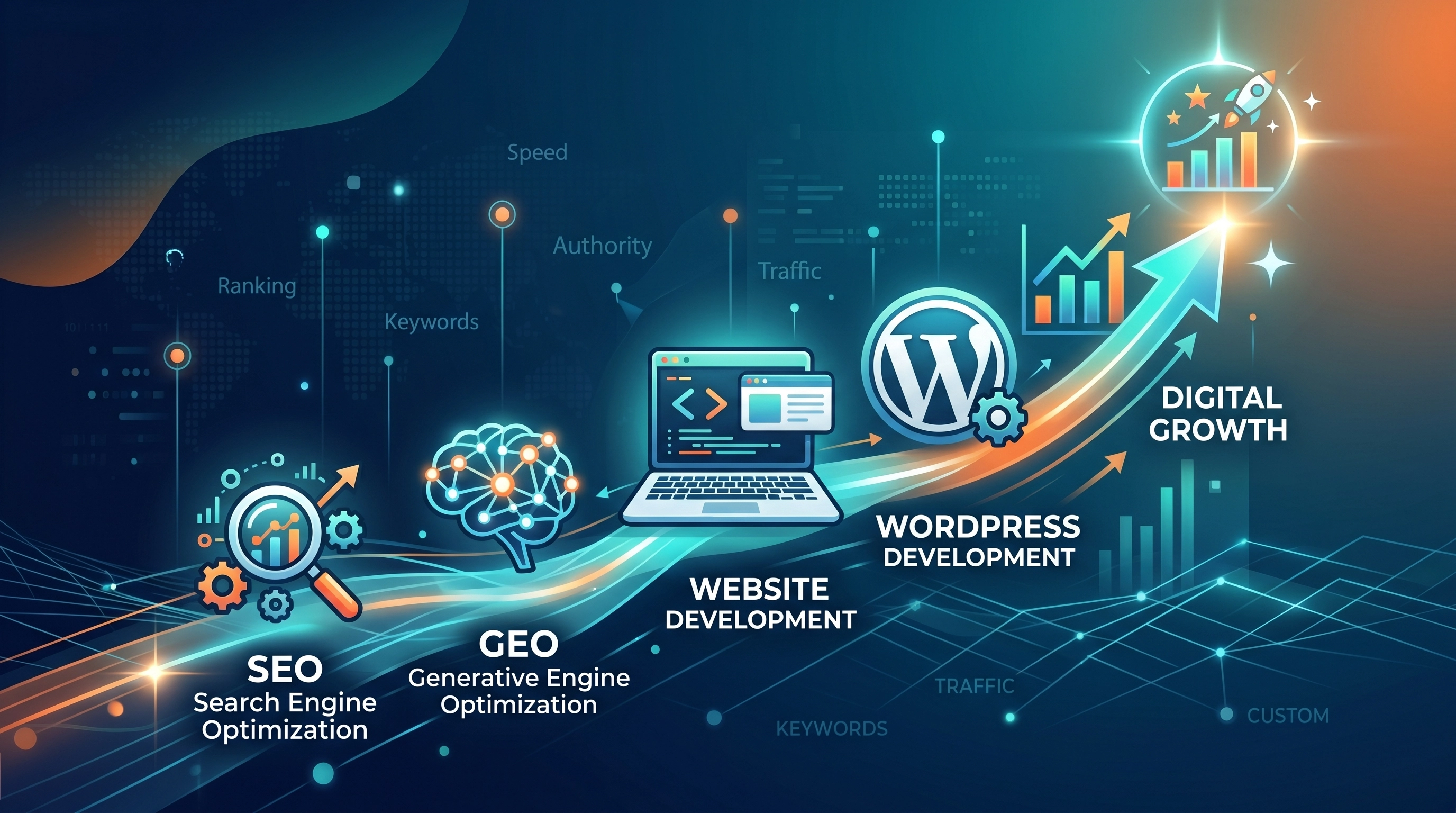
FlipGrowth focuses on integrating website development, SEO, and digital strategy into a single, cohesive system. Instead of treating these elements separately, the approach ensures that every part of your digital presence works together.
From building high-performance websites to delivering data-driven search engine optimization services, FlipGrowth helps businesses create scalable and reliable digital ecosystems. The focus is always on measurable growth, long-term performance, and sustainable results.
Conclusion: Why You Need a Digital Growth Partner
A website without SEO lacks visibility, and SEO without proper development lacks impact. Real growth happens when both elements work together seamlessly.
As search continues to evolve with AI-driven experiences, businesses must adopt a unified strategy that combines content, technical excellence, and development.
If your website is not delivering results, it may be time to rethink your approach and invest in a system that supports long-term growth. Schedule a technical audit or consultation to unlock the full potential of your digital presence.
Frequently Asked Questions (FAQs)
1. What is Search Engine Optimization in simple terms?
Search Engine Optimization is the process of improving a website so it appears higher in search results when users search for relevant topics. It involves optimizing content, improving technical performance, and enhancing user experience. A well-optimized website helps attract organic traffic, build trust, and increase conversions over time, making it essential for long-term digital growth.
2. How does SEO work behind the scenes?
SEO works through crawling, indexing, and ranking. Search engines discover your pages, store them in their database, and rank them based on quality, relevance, and performance. Factors like website speed, mobile responsiveness, structured data, and content clarity all influence how well your site performs and how easily search engines can understand your content.
3. What is the difference between SEO and GEO?
SEO focuses on ranking websites in traditional search results, while Generative Engine Optimization focuses on optimizing content for AI-generated answers. GEO ensures that your content is structured, clear, and authoritative so that AI systems can use it as a reliable source when providing direct answers to users in modern search environments.
4. Why is website development important for SEO?
Website development impacts speed, structure, and usability, which are key ranking factors. A well-developed website ensures search engines can crawl and index your pages efficiently. It also improves user experience, which increases engagement and conversions. Without proper development, even strong content may not perform well in search results consistently.
5. Is WordPress good for SEO and website growth?
WordPress is highly SEO-friendly because it offers flexibility, customizable URLs, and strong plugin support. With custom development, it allows businesses to build fast, secure, and scalable websites. This makes it an ideal platform for improving rankings, enhancing user experience, and supporting long-term digital growth across different search environments.
6. How can businesses build trust and authority online?
Businesses can build trust by providing accurate content, maintaining a secure website, and demonstrating real expertise in their field. Consistency, transparency, and user-focused content play a key role. Following EEAT principles helps search engines recognize your website as reliable, which improves rankings and builds long-term credibility with your audience.