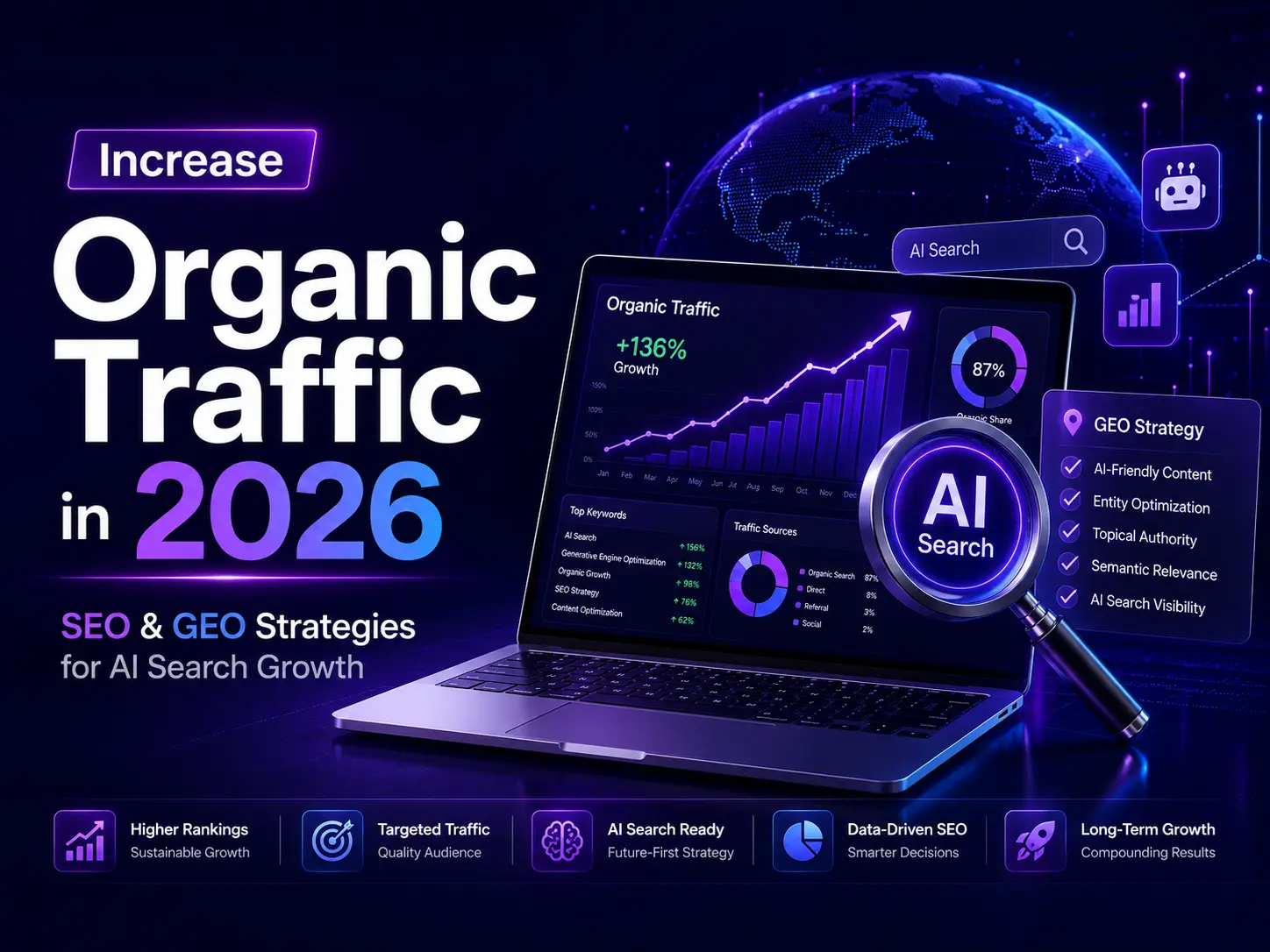
The world of SEO is changing rapidly. Traditional search optimization strategies still matter, but artificial intelligence is now shaping how users discover information online. Google AI Overviews, conversational search engines, voice assistants, and visual search platforms are changing user behavior across every industry.
In 2026, ranking on the first page of Google is no longer enough to maintain strong website traffic. Search engines are now providing direct answers to users before they even visit websites. This means brands must focus on becoming trusted information sources instead of simply targeting keywords.
At FlipGrowth, we have worked with businesses that experienced declining traffic even while maintaining high keyword rankings. The biggest reason behind this shift is the rise of AI-generated search experiences. Businesses that adapt early to GEO-focused SEO strategies are now gaining stronger visibility across search engines, AI systems, and multi-modal platforms.
The future of SEO belongs to brands that combine expertise, structured content, technical optimization, and real-world experience.
What Is GEO and Why Does It Matter in 2026?
Generative Engine Optimization, also known as GEO, is the process of optimizing content for AI-powered search systems such as Google AI Overviews, Bing Copilot, and conversational AI platforms.
Traditional SEO mainly focused on rankings, backlinks, and keyword targeting. GEO expands this approach by helping AI systems understand, trust, and recommend your content inside generated search responses.
Modern search engines now prioritize:
- Structured information
- Topic authority
- Human experience
- Contextual relevance
- Entity optimization
- AI-readable formatting
This means businesses must create content that is useful not only for users but also for AI systems that summarize and distribute information.
How do you rank in AI Overviews?
You rank in AI Overviews by publishing high-quality content that includes direct answers, structured formatting, original insights, expert experience, and schema-supported information that AI systems can easily understand and verify.
At FlipGrowth, we noticed that content using clear answer sections and question-based headings performed significantly better in AI-powered search results. During a recent campaign for a regional business in Nashik, we restructured content into concise answer-focused sections and improved featured snippet visibility by nearly 34% within four months.
That campaign revealed an important insight: Google now rewards clarity, usefulness, and structure more than keyword stuffing.
Information Gain Is the Future of SEO Content
Google increasingly rewards websites that contribute original value to the internet. This concept is known as Information Gain.
Instead of rewarding repetitive content, search engines now prioritize fresh perspectives, unique insights, practical experiences, and expert observations.
What is Information Gain in SEO?
Information Gain refers to adding something new, useful, and unique to the web instead of rewriting existing articles from competitors.
At FlipGrowth, we have consistently seen experience-driven content outperform generic AI-generated blogs. One ecommerce client achieved a 62% increase in organic traffic after replacing generalized articles with content containing original campaign learnings, customer behavior analysis, performance insights, and expert recommendations.
This proves that search engines are becoming better at understanding whether content is genuinely valuable or simply rewritten from other sources.
How to Create Information Gain
Businesses can improve Information Gain by:
- Publishing real campaign experiences
- Sharing original research
- Including customer behavior analysis
- Adding expert observations
- Using detailed comparison tables
- Providing practical lessons from projects
The more original value your content provides, the higher the chances of improving long-term SEO performance.
Why E-E-A-T Matters More Than Ever
E-E-A-T stands for Experience, Expertise, Authority, and Trust. These signals help Google determine whether content deserves visibility in search results.
In 2026, experience has become one of the strongest ranking factors because AI-generated content is growing rapidly across the internet. While AI tools can generate information quickly, they cannot genuinely replicate real-world business execution or practical marketing experience.
At FlipGrowth, we intentionally include campaign observations, project learnings, and testing insights within our content because practical experience creates stronger trust signals for both users and search engines.
Why does experience matter in modern SEO?
Experience matters because search engines want to promote content created by people who have actually tested strategies, solved problems, and managed real-world campaigns.
Businesses can improve E-E-A-T signals by:
- Publishing case studies
- Adding expert author bios
- Sharing campaign outcomes
- Including client success stories
- Providing trustworthy information
- Maintaining consistent brand authority
Phrases such as “In our experience,” “During a recent SEO campaign,” and “While managing a client project” help search engines identify authentic expertise.
Structured Content Helps AI Understand Your Website
AI-powered search systems prefer content that is organized, clear, and easy to verify. Structured formatting makes it easier for AI systems to summarize information and use it inside generated search responses.
What type of content performs best in AI search?
Content with structured headings, concise answers, tables, FAQs, schema markup, and organized formatting performs best in AI-driven search environments.
Here is a simple example of modern SEO priorities:
| SEO Strategy | Importance in 2026 |
|---|---|
| GEO Optimization | Very High |
| Structured Data | Very High |
| Video SEO | High |
| Internal Linking | High |
| Mobile Optimization | High |
| Keyword Stuffing | Very Low |
This type of formatting increases the chances of appearing in featured snippets, AI summaries, and conversational search results.
Businesses should also focus on readability. Large paragraphs reduce engagement, while structured layouts improve user experience and content understanding.
Technical SEO Still Builds the Foundation
Even the best content struggles if search engines cannot crawl and understand a website properly. Technical SEO remains one of the most important foundations of organic growth in 2026.
Modern websites must prioritize speed, mobile usability, schema implementation, and crawl efficiency.
What are the most important technical SEO factors in 2026?
The most important technical SEO factors include schema markup, page speed optimization, mobile responsiveness, internal linking, clean website architecture, and structured metadata.
Websites should implement JSON-LD schema for:
- Articles
- FAQs
- Services
- Organizations
- Reviews
- Videos
Structured data helps AI systems interpret your website more accurately and improves visibility across modern search environments.
At FlipGrowth, we have seen businesses improve indexing and featured snippet visibility significantly after implementing proper schema structures.
Multi-Modal Search Is Growing Rapidly
Organic traffic is no longer limited to text-based search. Google Lens, visual search, video snippets, and voice assistants are now driving major search opportunities.
This shift means businesses must optimize content for multiple content formats instead of relying only on written blogs.
What is multi-modal SEO?
Multi-modal SEO focuses on optimizing content for text, video, image, and voice search experiences.
At FlipGrowth, we recommend including visual and video elements within every major content asset because search engines increasingly prioritize interactive and multimedia experiences.
Multi-Modal SEO Best Practices
Businesses should include:
- Infographics
- Short-form videos
- Optimized image alt text
- Video schema markup
- Descriptive image captions
- Mobile-friendly visuals
Suggested Visual Asset
Alt Text:
“2026 SEO and GEO roadmap infographic explaining AI-powered search optimization strategies.”
Suggested Video Topic
“60-second guide explaining how AI Overviews impact organic traffic in 2026.”
These additions improve visibility across visual search, video snippets, and conversational search systems.
Building Topical Authority with Content Clusters
Publishing random blog posts without a strategy no longer delivers strong SEO results. Google now rewards websites that demonstrate deep expertise within a specific subject area.
This is why topical authority has become one of the most important SEO strategies in 2026.
What is topical authority?
Topical authority means becoming a trusted source for an entire subject by publishing connected and comprehensive content around one core topic.
Businesses should use the Hub and Spoke model to organize content more effectively.
Example of a Topical Authority Structure
Pillar Page
- Complete Guide to Digital Marketing
Supporting Cluster Articles
- GEO Optimization
- AI Search Optimization
- Technical SEO
- Video SEO
- Voice Search SEO
- Local SEO
- Ecommerce SEO
- Content Marketing
- Schema Markup
- Marketing Automation
This structure helps search engines understand your expertise more clearly and improves internal keyword relevance.
Internal Linking Improves SEO Performance
Internal linking plays a major role in helping users and search engines navigate your website. It also helps distribute authority across important pages and improves crawl efficiency.
Businesses should avoid generic anchor text and instead use descriptive links that clearly explain the linked topic.
Examples of Strong Internal Link Anchors
- Read our complete GEO optimization guide
- Explore advanced technical SEO strategies
- Learn more about AI-powered search optimization
At FlipGrowth, improving internal linking structures has consistently increased keyword visibility and indexing performance for multiple client websites.
Final Thoughts
SEO in 2026 is no longer only about rankings and keywords. It is about becoming the most trusted, useful, and experience-driven source of information within your industry.
Businesses that succeed today are focusing on:
- GEO optimization
- E-E-A-T signals
- Structured content
- Technical SEO
- Multi-modal search
- Topical authority
- Human experience
The future of organic traffic belongs to brands that become indispensable to both users and AI systems.
If your traffic is declining because of AI Overviews or changing search behavior, this is the right time to build a GEO-first SEO strategy designed for the future of search.
FlipGrowth helps businesses create AI-ready SEO strategies that improve long-term organic visibility across modern search environments.
Frequently Asked Questions
What is the difference between SEO and GEO?
SEO focuses on improving visibility in traditional search engine rankings, while GEO focuses on optimizing content for AI-generated search experiences such as Google AI Overviews and conversational search systems. Businesses that combine both strategies are more likely to maintain long-term visibility in modern search environments.
Can AI-generated content still rank in 2026?
Yes, AI-generated content can still rank if it includes human-reviewed expertise, original insights, structured formatting, and real-world experience. Generic AI-written content without practical value or authentic expertise is becoming less effective as Google prioritizes trustworthy and experience-driven information.
How long does it take to increase organic traffic in 2026?
Most businesses begin seeing measurable SEO improvements within three to six months depending on website authority, competition, and content quality. GEO optimization and AI visibility improvements may take additional time because AI systems rely heavily on trust signals and topical authority.
Why is E-E-A-T important for SEO?
E-E-A-T helps Google evaluate whether content is trustworthy, experience-driven, and useful for users. Strong Experience, Expertise, Authority, and Trust signals improve visibility across traditional search engines and AI-powered search experiences.
Why should businesses invest in GEO?
GEO helps businesses remain visible in AI-powered search environments where traditional rankings alone are becoming less effective. Businesses that optimize for AI-generated search experiences today are more likely to maintain strong organic visibility in the future.