Why Traditional SEO Is Losing Power
Search is changing faster than most businesses expected. A few years ago, ranking on the first page of Google was enough to bring consistent traffic and leads. Today, that same strategy is losing its impact. Many users now search on Google but never click on any website. This happens because of zero-click searches and features like Google AI Overviews, where answers are displayed directly on the search results page.
This shift has created a serious challenge for businesses that depend only on organic traffic. Even if your website ranks at the top, users may still not visit your page. As a result, brands are seeing a drop in clicks, engagement, and conversions.
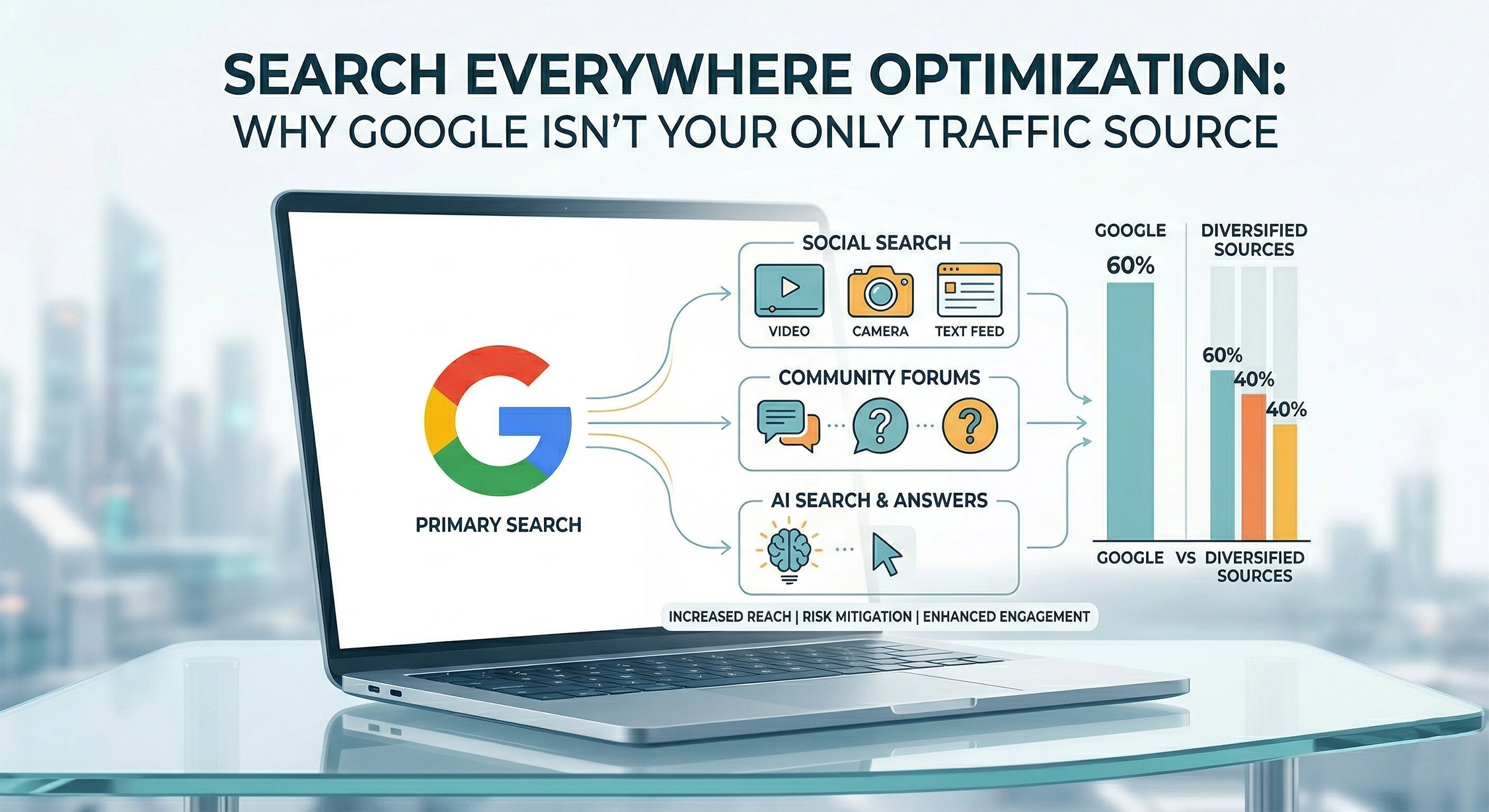
At the same time, user behavior has evolved. People are no longer using only one platform to search for information. Instead, they are exploring different platforms based on their needs and preferences. For example, users now search for tutorials on YouTube, quick tips on TikTok, and recommendations on Instagram.
This change clearly shows that traditional SEO alone is no longer enough. Businesses must adapt to a broader strategy that covers multiple platforms and user touchpoints.
The Paradigm Shift: Search Is No Longer Limited to Google
The way people search today depends on what they want to find. If someone wants a detailed explanation, they may still use Google. But if they want a quick answer or visual guidance, they are more likely to use social media or video platforms.
Users also look for trust and authenticity. Instead of relying only on search engine results, they prefer real opinions and experiences. This is why platforms like Reddit and Quora have become popular sources of information.
Another major shift is the rise of AI-powered search tools. Platforms like ChatGPT and Perplexity AI allow users to ask questions in a natural way and receive direct answers instantly. These tools reduce the need to browse multiple websites, making traditional search journeys shorter and more efficient.
This shift is known as Search Everywhere Optimization. It focuses on making your brand visible across all platforms where users are searching, not just on Google.
Why FlipGrowth Believes in This Strategy
After more than five years of experience in digital marketing, the team at FlipGrowth has seen how quickly algorithms and user behavior can change. Strategies that worked in the past are no longer delivering the same results.
One clear insight stands out. Businesses that depend only on Google SEO are at risk. A single algorithm update can significantly impact their traffic and revenue.
On the other hand, brands that build a presence across multiple platforms are more stable and successful. They attract users from different sources, build stronger trust, and create multiple opportunities for conversion.
This is why FlipGrowth focuses on creating omnichannel strategies that combine SEO, content marketing, and platform-specific optimization.
The Fragmentation of Search: Where Did the Traffic Go
The Rise of Video Search
Video content has become one of the most powerful forms of search. Users prefer watching videos because they are easy to understand and save time. Instead of reading long articles, they search for solutions directly on video platforms.
For example, a user who wants to learn digital marketing basics is more likely to watch a video on YouTube than read a long blog post. Similarly, quick tips and hacks are often searched on TikTok.
This shift has made video SEO essential for businesses. Optimizing video titles, descriptions, and captions with relevant keywords helps improve visibility. Adding subtitles and transcripts also makes content more accessible and searchable.
Businesses that invest in video content can capture a large audience that prefers visual learning.
The Shift to Real Opinions and Community Trust
Modern users value authenticity more than ever. They want honest opinions before making decisions. This is why community-based platforms have gained importance.
Instead of searching for the best product or service directly, users often look for discussions and reviews. They trust recommendations from real people more than promotional content.
Platforms like Reddit and Quora allow users to ask questions and receive answers from people who have real experience. This creates a sense of trust and reliability.
For businesses, this means building a strong presence in these communities. Instead of promoting products directly, brands should focus on providing helpful answers and sharing valuable insights. Over time, this builds authority and trust.
The Growth of AI Search and Instant Answers
AI-powered search tools are transforming how users access information. Platforms like Claude provide direct answers based on user queries.
Users can ask complex questions and receive clear, structured responses within seconds. This reduces the need to visit multiple websites and compare information.
For businesses, this creates a new challenge and opportunity. Content must now be optimized not only for search engines but also for AI systems.
This means creating content that is clear, accurate, and easy to understand. Structured data, well-organized information, and strong authority signals increase the chances of being selected by AI tools.
The Core Pillars of Search Everywhere Optimization
Pillar 1 Video SEO
Video SEO focuses on improving visibility on video platforms. This involves optimizing titles, descriptions, and tags with relevant keywords.
Businesses should also focus on creating engaging content that solves real problems. Adding captions and transcripts improves accessibility and helps search engines understand the content better.
Consistency is important. Regular uploads increase visibility and build audience trust over time.
Pillar 2 Social Media Search Optimization
Social media platforms are no longer just for entertainment. They are now powerful search engines where users discover content based on keywords and interests.
To optimize for social media search, businesses should include keywords in video speech, captions, and on-screen text. Profiles should be fully optimized with clear descriptions and relevant keywords.
Content should be simple, informative, and easy to consume. The goal is to provide quick value to the user.
Pillar 3 Generative Engine Optimization
Generative Engine Optimization focuses on ranking in AI-powered search tools. This requires a different approach compared to traditional SEO.
Key strategies include
Creating high-quality and helpful content
Using structured data to improve understanding
Building strong backlinks from trusted sources
Gaining mentions on authoritative platforms
Content should be written in a clear and simple way so that AI systems can easily process and present it.
Pillar 4 Community Authority
Building authority in communities is essential for long-term success. Users trust brands that actively participate in discussions and provide genuine value.
Businesses should focus on answering questions, sharing insights, and helping users solve problems. Avoiding spam and promotional content is important.
Over time, consistent participation builds credibility and positions the brand as an expert in its field.
The Business Case: Why This Strategy Drives Better ROI
Lower Competition and Higher Intent
Competing for top rankings on Google can be difficult and time-consuming. However, targeting specific queries on platforms like YouTube or Reddit can bring better results.
These platforms often have lower competition and attract users who are more likely to take action.
Stronger Brand Visibility and Trust
When users see your brand across multiple platforms, they become familiar with it. This repeated exposure builds trust and increases the chances of conversion.
A strong omnichannel presence ensures that your brand stays in the user’s mind throughout their decision-making journey.
Diversification and Risk Management
Relying on a single platform can be risky. Changes in algorithms or policies can affect your traffic and revenue.
By diversifying your presence across multiple platforms, you reduce this risk. Even if one channel underperforms, others can continue to drive traffic and leads.
This creates a more stable and sustainable growth model.
Conclusion: The Future of SEO Is Omnichannel
Search is no longer limited to one platform. Users are exploring multiple channels to find information, compare options, and make decisions.
Businesses that adapt to this change will have a clear advantage. They will reach users at different stages of the journey and build stronger connections.
Search Everywhere Optimization is not just a trend. It is the future of digital marketing.
To succeed in 2026 and beyond, businesses must think beyond Google and focus on the entire search ecosystem.
Scale Your Growth with Omnichannel SEO Strategy
Stop relying on outdated strategies that limit your growth. Your customers are searching across multiple platforms, and your brand needs to be there.
At FlipGrowth, we combine deep expertise in SEO, website development, and digital marketing to build powerful omnichannel strategies. We help businesses create strong visibility across search engines, social media, video platforms, and AI tools.
Our approach focuses on long-term growth, better engagement, and higher conversions.
Ready to scale your visibility and capture high-intent traffic across every platform
Visit flipgrowth.in and start building your custom growth strategy today
FAQs
What is Search Everywhere Optimization
Search Everywhere Optimization is a strategy that focuses on improving brand visibility across multiple platforms like Google, social media, video platforms, and AI tools
Why is traditional SEO not enough in 2026
Because users now get answers directly from search results or AI tools, reducing the number of website clicks
How can businesses rank in AI search tools
By creating clear, structured, and high-quality content with strong authority signals
Is video content necessary for SEO
Yes, video content is a major source of traffic and helps reach users who prefer visual content
How does this strategy improve ROI
It increases visibility, builds trust, and attracts high-intent users from different platforms, leading to better conversions